
A Conversation with Pedro Rosaly
The president of Hecho en Puerto Rico on the seal, the diaspora, logistics, and the change Puerto Rico needs.
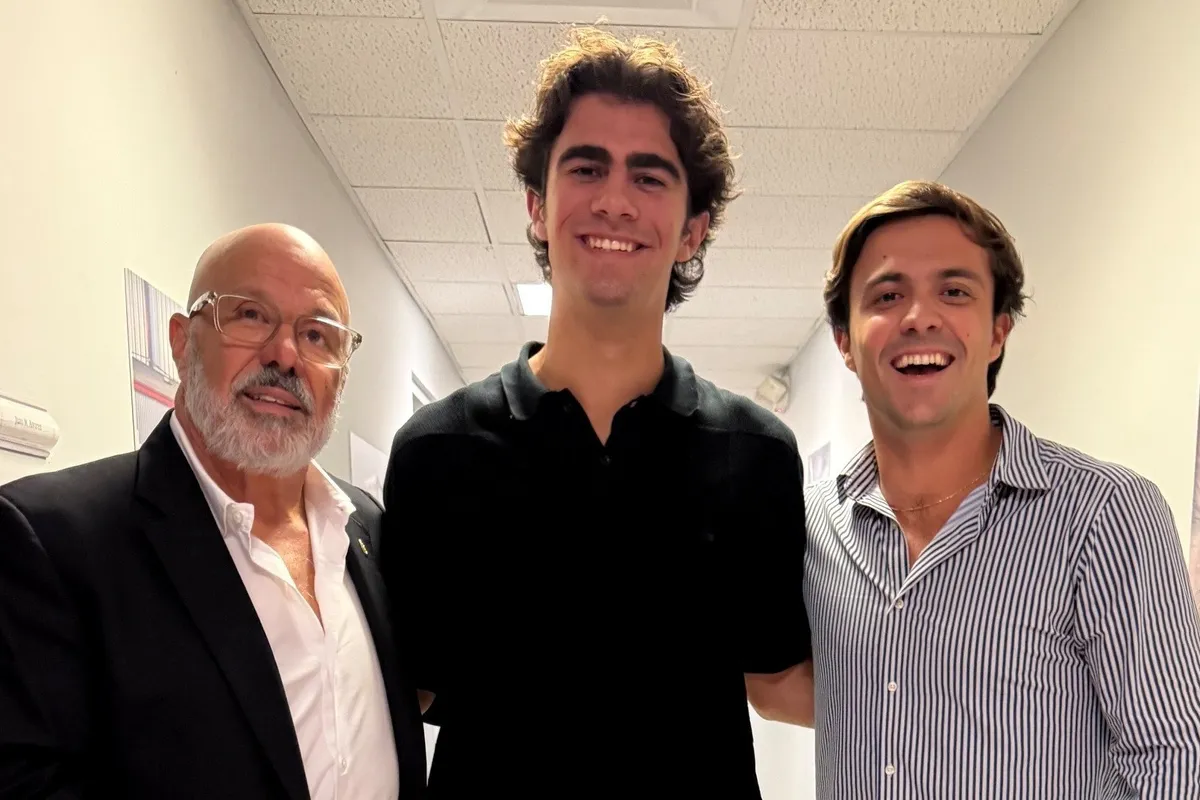
Pedro Rosaly, Rauli Matos & Henry Rosaly.
What is Hecho en Puerto Rico?
What exactly is Hecho en Puerto Rico, and what is the organization trying to accomplish?
“Es una organización que lleva 117 años. Se funda principalmente para proteger la industria agrícola acá.”
“Lo que estamos buscando es darle más valor a esa frase de ‘Hecho en Puerto Rico.’”
“Estamos tratando de unir todo el sector productivo para que dejemos tantas divisiones y reconozcamos cuáles son las posibilidades que tenemos en Puerto Rico.”
A lot of Pedro’s mission for Hecho en Puerto Rico connects with what we are trying to accomplish through La Mecha. Both organizations want to strengthen the island by connecting entrepreneurs, sharing opportunities, and making the community work to develop Puerto Rico more visibly. Hecho en Puerto Rico does this on a larger scale by connecting businesses with consumers and Puerto Rican talent in the United States and the diaspora. La Mecha can contribute by telling the stories behind that movement and highlighting the skilled people who are already building their lives and businesses here.
“Necesitamos más empresarios apoyando a empresarios.”
That point stayed with me because developing Puerto Rico requires more than bringing in talent or promoting individual businesses. It also requires a culture where entrepreneurs recognize one another and can work together to create more opportunities for more people to succeed.
What does the seal represent?
What does a company or product have to do to carry the Hecho en Puerto Rico seal?
“Si lo vas a poner en el producto, en la etiqueta, o vas a exportar, tienes que cumplir un objetivo: que por lo menos 35% de la manufactura o de la fórmula esté hecha en Puerto Rico.”
How can Puerto Rico reconnect with its diaspora?
How can Puerto Rico bring back members of the diaspora who have built careers in the United States but might be interested in returning?
“Yo estoy tratando, de Hecho en Puerto Rico, de cómo unimos esos dos mundos.”
“Hay una comunidad buenísima y hay una receptividad al tema de Puerto Rico. La contestación no la sé, pero sí te puedo decir que tenemos que explorar.”
“Hay un grupo talentoso, bilingüe, open, increíble para traer para acá.”
“Una vez que se monta uno, se montan dos, se montan tres.”
Reconnecting with the diaspora starts with making the opportunities in Puerto Rico easier to see. People looking to begin their careers on the island may struggle to find information about the companies looking to hire their roles. La Mecha can help close that gap by showing what exists, who is leading the work, and where people can contribute. Building a stronger pipeline between young professionals, the diaspora, and local employers is important for developing industries that already have a foundation here.
“Hay más puertorriqueños allá que acá. Están preparados, son agónidas, tienen hambre, y nos valoran.”
Pedro sees the diaspora as a skilled and hungry community that still feels connected to Puerto Rico. A movement like the one we aim to start could contribute to Puerto Rico’s next period of industrial growth, building on the foundation created during the era of Section 936 by connecting established industries with a new generation of Puerto Rican talent.
What kind of change does Puerto Rico need?
When you talk about changing Puerto Rico, what does meaningful change actually look like?
“Change is desperately needed. Tú no arreglas Puerto Rico de un día para otro. Tú lo que haces es que you change the pattern.”
“Nosotros somos la última carta que queda, mano: el sector privado.”
“Si el sector privado se une… tú eres PNP, tú eres Popular, tú eres esto, tú eres lo otro, no importa. Tú compites aquí, tú compites allá, que se joda. If you come here, you need to act and work together.”
Change can’t be implemented overnight; addressing the island’s challenges requires breaking the patterns that keep it from moving forward and replacing them with consistent progress. The private sector has the resources, talent, and influence to address many of these issues, but that requires business leaders to work beyond political parties. Working across the aisle seems to be the critical idea that could create the stability and momentum needed for long-term change.
What role could drones play in Puerto Rico?
What could drones and similar technologies mean for the future of logistics in Puerto Rico?
“The industry is already there, in many places. You have UPS, Kansas, and all these places, that they get to a farm and send the drone in, drop the package, and come back.”
“I believe in this a lot, and I hope that we jump into that.”
“I see a lot of specific uses. It’s not something that’s going to replace the whole volume of a commercial B2C customer.”
Pedro sees drones’ greatest potential in specific routes and time-sensitive deliveries where speed and efficiency matter. Puerto Rico would not be starting from zero: the island already has major aerospace and defense operations, along with experience in unmanned aerial vehicles and their components. This creates an opportunity to connect capabilities that already exist on the island with commercial logistics. Testing drone deliveries could help Puerto Rico expand its manufacturing knowledge into practical applications.
How does Islandwide manage health-related deliveries?
How is Islandwide involved in pharmaceutical and healthcare distribution?
“Nosotros tenemos dos droguerías. Tenemos todo lo que es Cardinal Health. Son como 3,500 entregas.”
“Las saco de allí a las 12 de la noche. Las entrego antes de las 10 y media en todas las farmacias.”
“Todo es dashboard driven y visibility.”
Pharmaceuticals and medical devices are among the largest industries already established in Puerto Rico. Pedro’s description of approximately 3,500 deliveries leaving around midnight and reaching pharmacies before 10:30 a.m. shows the scale and coordination required to support that industry. His focus on dashboards and visibility helped me see companies like Islandwide as an important connection between Puerto Rico’s manufacturing strength and the patients and communities that depend on these products.
What does Ponce need to attract more business?
What does Ponce and the southern region need to compete more effectively with San Juan, especially in business and transportation?
“Puerto Rico todavía puede ser un hub.”
“Tienes una buena pista acá, tienes una buena pista en Aguadilla, tienes otra buena pista en Ponce y tienes una pista espectacular en Roosevelt Roads.”
“Puerto Rico tiene que tomar decisiones que sean a largo plazo, donde una línea aérea diga: ‘Mira, ya estos tipos tomaron una decisión. I can bet on that.’”
A large amount of Puerto Rico’s business activity and transportation is concentrated in San Juan, which can make Ponce and the southern region feel less accessible. An important part of this picture Pedro brought up was the airline industry and the role they play in attracting business. I mentioned that for the first time, I took a direct JetBlue flight from Fort Lauderdale to Ponce. Pedro explained that airlines need confidence in Puerto Rico’s long-term plans before committing to a route. Building reliable routes could make the south more attractive for business and investment while spreading more economic activity beyond the San Juan metropolitan area.
How can employers support lacrosse and community programs?
How can businesses help support lacrosse and the people working to grow the sport in Puerto Rico?
“Le abro la puerta para que venga para acá. Hay trabajo de chofer al igual que en el almacén, tienen que aplicar con mi equipo.”
Pedro showed me that employers can support community programs in simple but meaningful ways. Helping a coach find a job and giving him time to attend practice can make a real difference. This kind of support gives coaches and athletes more reasons to stay in Puerto Rico while helping programs like lacrosse continue to grow.