
One Small Step from Santa Isabel
Inside Collins Aerospace’s Santa Isabel operation, advanced manufacturing, workforce training, and an emerging lacrosse community reveal how Puerto Rico can turn first opportunities into lasting pathways.
“That’s one small step for man, one giant leap for mankind.”
The sentence became part of Rockwell Collins’ legacy, which later became Collins Aerospace, making it an appropriate start for the first La Mecha feature. It traveled roughly 240,000 miles before entering history. Neil Armstrong’s voice reached Earth through communications technology that included a Collins radio, part of the lineage of today’s Collins Aerospace.
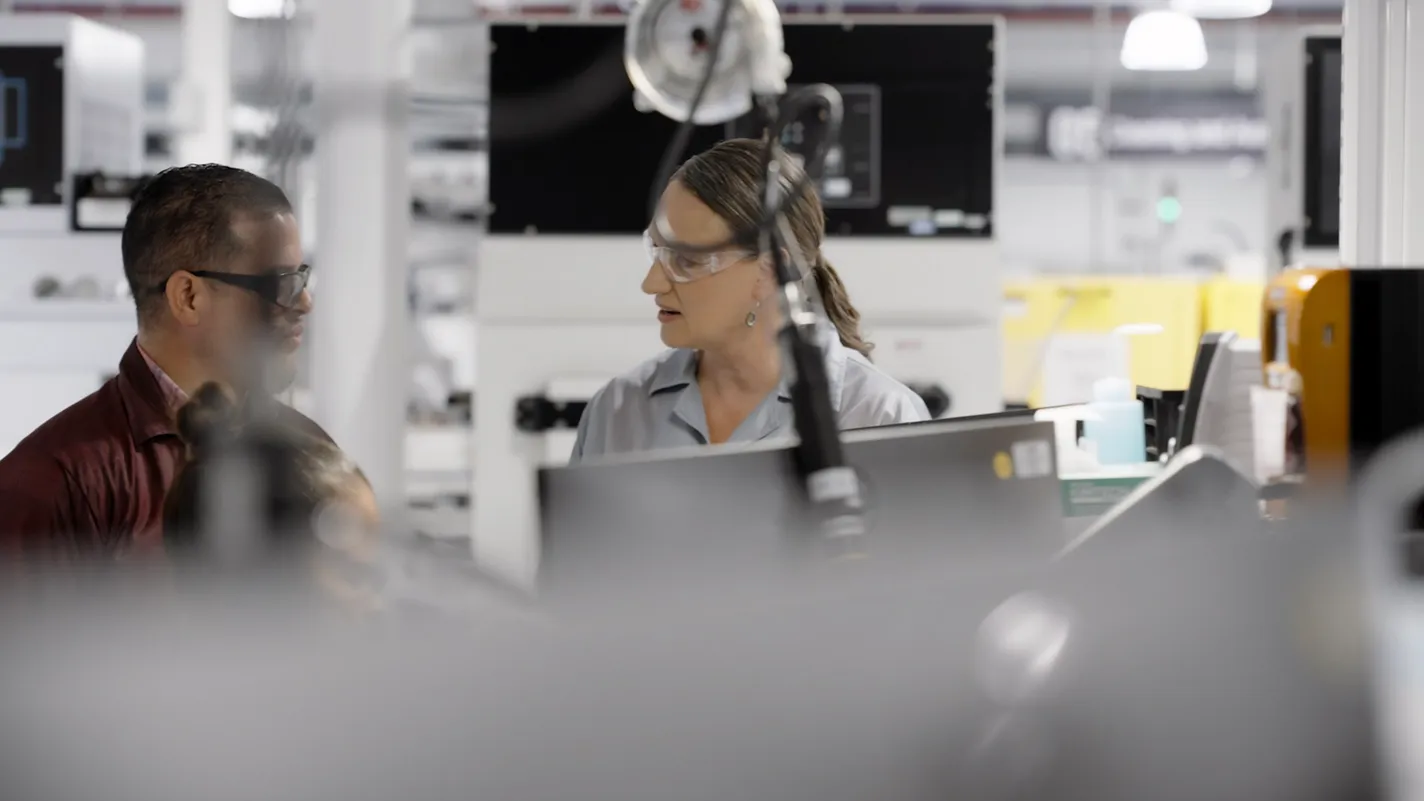
More than half a century later, inside a Collins Aerospace facility in Santa Isabel, Puerto Rico, Margaret Horsfield continues that same forward-looking spirit. Through a lacrosse connection, my father and I had the opportunity to tour the facility. Wearing required heel-grounding straps, we saw the precision of mechanical and electrical engineering on display, as well as the number of high-quality jobs the facility provides. We saw the entire operational process, from building printed circuit boards to testing them in rooms designed to simulate vibration. We also visited the dedicated training spaces where we learned that Collins prepares employees in certain roles to work independently within four to six months.
As Associate Director of Strategy for Puerto Rico Operations, Margaret sees the Santa Isabel site as part of a larger industrial network. Yet her relationship with Puerto Rico is not only strategic or professional; moving here was a decision that changed the direction of her family’s life.
Horsfield came to the island through an opportunity with Collins Aerospace. She and her husband, David, moved their three children (Henry, Mabel, and Vera) from Iowa to Puerto Rico, exchanging Midwest winters for constant Caribbean summers. Settling in the southern region, the Horsfield family quickly put down roots and became active participants in a vibrant community they have now come to love.
“We didn’t want Puerto Rico to just be the place where Mom and Dad have a job. We wanted it to become part of our family’s story.”
Margaret reached out to the Ponce Lions on March 4, explaining that her two daughters and son had played lacrosse in Iowa, but that finding a team in Puerto Rico was, to say the least, not easy. Puerto Rico already has deep traditions in baseball, basketball, volleyball, and other sports. Lacrosse offers something different precisely because it is still emerging. Horsfield saw an opportunity not merely to join a system, but to help build one.
Of course, developing lacrosse in a place where most kids have never even heard of it has proved difficult. Donated equipment and occasional clinics can serve as catalysts for a larger movement, but, on their own, cannot create lasting change. Change requires coaches, volunteers, safe places to play, frequent instruction, connections across the island, and a visible path from beginner to more advanced competition. Margaret sums it up best:
“A bag of lacrosse sticks sitting in a storage room doesn’t build a program. Coaches build programs.”
Every meaningful first step depends on people who believe in where it can lead. Santa Isabel’s machines and facilities are only as valuable as the people trained to operate them, just as donated equipment is only as valuable as the coaches and volunteers who put it into young players’ hands.
For professionals who care about both Puerto Rico and the sport, there is a rare opportunity to build a world-class career on the island while joining the lacrosse program early enough to shape its future and truly become a part of it.
Recently, David Horsfield took on the role of the Ponce Lions’ administrative assistant, turning the family’s commitment to Puerto Rico into weekly action. His three children help teach the newer players, strengthening their own understanding of the fundamentals by passing them on. The club now offers a free practice every week to any student interested in learning the game. Meaningful progress is being made: instead of encountering lacrosse through an occasional clinic, young players in Ponce now have a place where they can return, improve, and grow alongside a grassroots program.
For the Horsfield family, involvement in this opportunity is also a way to teach their children that being part of a community means contributing to it. At the same time, it teaches leadership and reinforces the importance of sports in developing a child’s character. Teamwork, communication, coachability, and resilience are qualities they can carry into their personal lives. Lacrosse, in particular, has a long history of connecting college players with strong professional networks. A well-built sports program can place young people within a community that helps them recognize opportunities and prepare for careers across many sectors.
Ponce Lions, together with La Mecha, can create that kind of network in Puerto Rico from the ground up. As the program grows, practices could become an entry point to mentorship, workplace visits, STEM activities, and conversations with professionals. Why not aerospace? At the company level, Collins offers internships, cooperative education programs, and entry-level opportunities for university graduates. Its Santa Isabel facility has also welcomed engineering students from the University of Puerto Rico at Mayagüez to meet professionals working in the industry. Public funding has been allocated to Collins’ Registered Apprenticeship Program to support on-the-job training for 62 new employees, including inspection technicians, machine operators, and test drivers.
“A young person may be talented in math, technology, leadership, or problem-solving but simply not know what careers exist or how to get there.”
Margaret has helped us identify another critical first step: awareness. Of course, lacrosse cannot provide the technical training required for these careers, although COODEP plans to offer after-school study spaces where student-athletes can continue developing academically. What lacrosse can provide are many of the qualities Margaret says Collins and other employers value: teamwork, discipline, communication, resilience, and a willingness to learn. And that is not an exaggeration. These qualities are developed through sports, carried into adult life, and reflected in Margaret’s own decision to take a chance and move her family to Puerto Rico.
As we wrap up this first feature, I want to illustrate why we all share the same devotion to the southern region of the island. Beautiful beaches, flavorful food, and a rich culture keep us coming back, but getting the chance to help a region devastated by hurricanes and earthquakes will stay with us forever. Whether through sports or aerospace, we share the belief that southern Puerto Rico can become a powerful center of opportunity, a place that, as our good friend and sports journalist Keyvan Antonio Heydari puts it, is known across the island as “donde se corta el bacalao.”
Margaret saw the possibility of that future and decided that the time to become part of it was now. When she told us about making that decision, she shared with my father and me the Bon Jovi lyrics that helped convince her to take the leap: “It’s My Life,” a reminder that it’s now or never. Those words became the catalyst for a new chapter in her family’s story, and I hope they inspire others to pursue their own passions and build careers in Puerto Rico.